
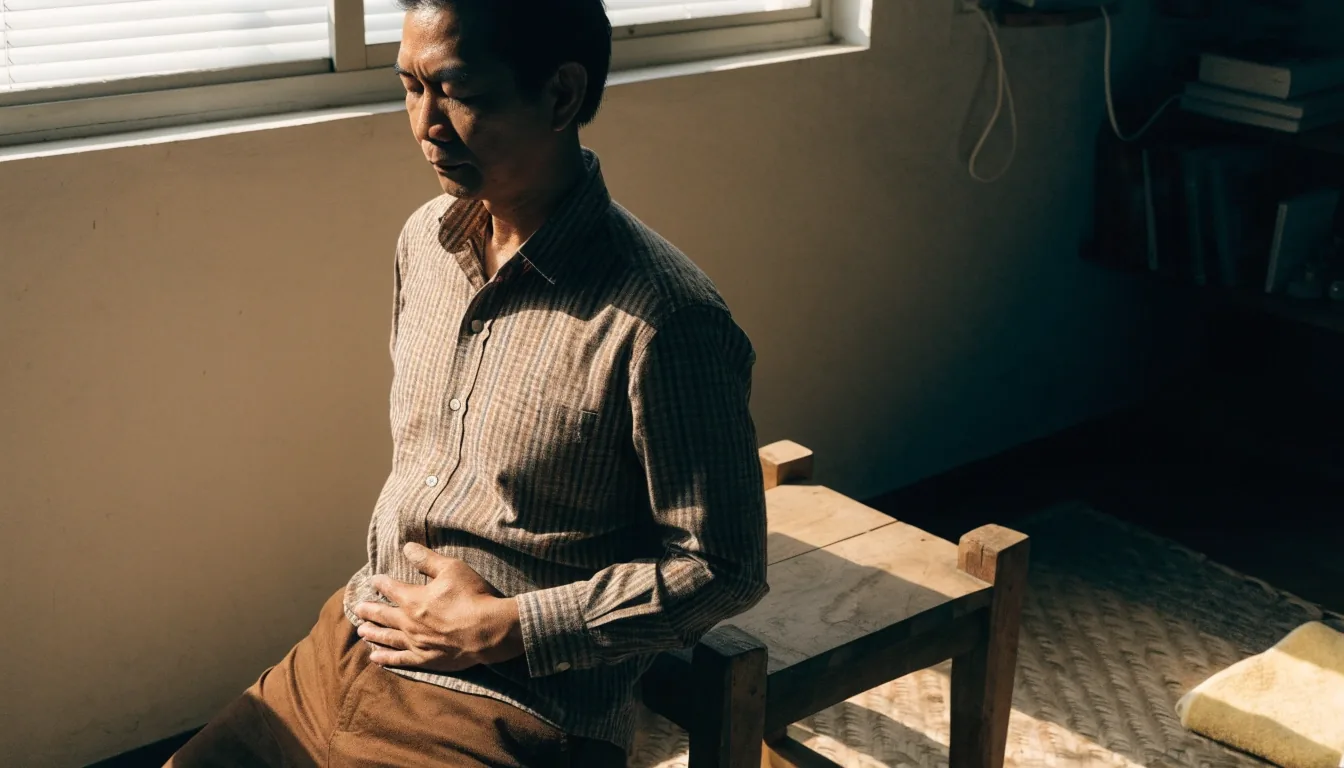
Pelvic floor training for men
Pelvic Floor Exercises for Men
How the muscles work, how to find the right ones without guessing, and how to fit slow holds and quick squeezes into an ordinary week in Indonesia.
This page is educational content about exercise and daily habits. It is not a substitute for advice from a qualified health professional, and nothing here is a promise of any particular outcome. If something hurts, stop and get personal guidance.
What the pelvic floor actually does
A short anatomy lesson in plain words — enough to know what you are squeezing before you start squeezing it.
The pelvic floor is a hammock of muscle that sits at the base of your pelvis, stretching from the pubic bone at the front to the tailbone at the back. It supports the bladder and the bowel, and it works with the deeper abdominal muscles when you lift something, cough, or laugh. Like any other muscle group, it responds to being used — and it gets lazy when it is never used deliberately.
Pelvic floor muscle training means contracting those muscles on purpose, holding for a moment, releasing fully, and repeating. The work is small and unglamorous. What changes is how often you do it, not how hard you push on any one repetition.
Support
The hammock holds the bladder and bowel in place while you move through the day.
Control
Trained muscles give you a clearer signal when you need to hold on and when you can let go.
Coordination
It works alongside your breathing and your deeper abdominal muscles, so timing matters as much as strength.

How to identify the correct muscles
Most people who think they are doing pelvic floor exercises are squeezing their thighs, their buttocks, or their stomach instead. The muscles you want are the ones you already use to stop the flow of urine mid-stream or to hold back wind. Use that feeling as a reference, then practise it away from the toilet — stopping the flow repeatedly during urination is not the exercise.
-
Lie down or sit tall with your feet flat and your shoulders relaxed. Empty your bladder first.
-
Breathe in normally, then as you breathe out, draw the muscles up and in as if you were lifting something small from the inside.
-
Your belly, thighs, and buttocks should stay quiet. If they tighten, you are recruiting help you do not need.
-
Release completely and rest for the same number of seconds before the next repetition. A full release matters as much as the squeeze.
Slow holds and quick squeezes
Two kinds of contraction cover most of what you need. Slow contractions build the steady holding capacity; quick squeezes train the fast response you rely on when you cough or sneeze. Start with the slow ones and add the quick ones once the movement feels familiar.
Contraction
Hold
Rest
Repeat
Slow hold
Hold: Build up to about 5 seconds
Rest: 5 seconds, fully released
Repeat: 5 repetitions, then a longer break
Quick squeeze
Hold: A brisk 1 second
Rest: 1 second between each
Repeat: 10 repetitions in a row
Everyday set
Hold: Same as above
Rest: Same as above
Repeat: Three sets spread across the day
These are starting points, not fixed targets. If five seconds feels like a strain, hold for two and build from there. Fewer clean repetitions beat a long set done with clenched thighs and held breath.
Building a routine that survives a busy week
Consistency beats intensity here, and the honest obstacle is not motivation — it is remembering. Attach the set to something you already do without thinking, and the routine stops depending on your mood.
-
Pick two fixed moments
One set after you brush your teeth in the morning, one while you wait for water to boil or a kettle to finish. Small anchors are easier to keep than a scheduled block.
-
Keep the first weeks short
One slow set and one quick set is enough at the start. Add a third set after a fortnight if the movement still feels controlled.
-
Track it the boring way
A tick on a paper calendar is plenty. What you are watching for is whether the week had three sets most days, not how strong the squeeze felt.
-
Give it weeks, not days
Muscle changes with repeated practice over time. Notice the pattern of your week first; judge anything else much later.
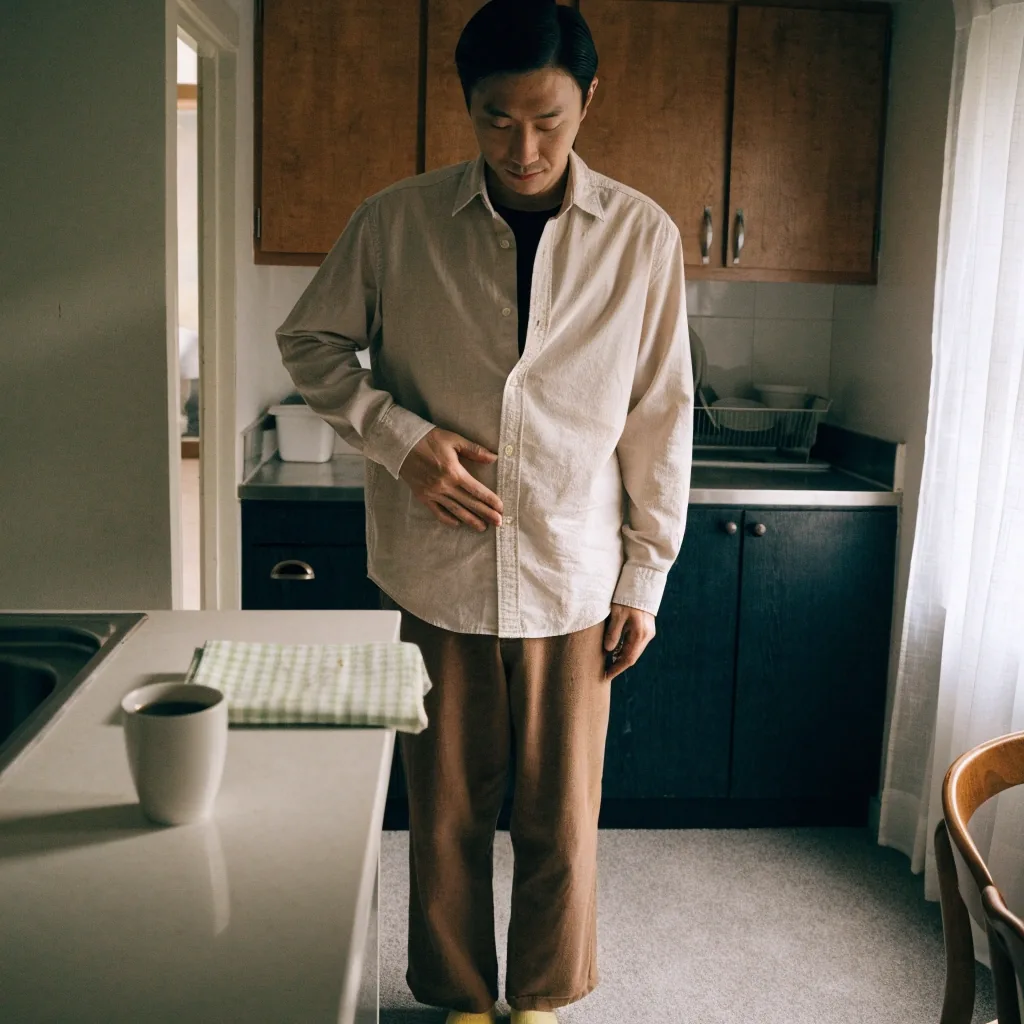
Habit stacking works because the trigger is already in your day. The kitchen counter, the bathroom sink, and the bus stop are all fair places to run a set — nobody around you can tell what you are doing.
Where most routines go wrong
Squeezing hard is not the same as squeezing well
Holding your breath
Bracing and holding your breath pushes pressure downward instead of training the muscle. Keep breathing at an even, easy pace through every repetition.
Clenching everything
If your buttocks and inner thighs join in, the pelvic floor is doing less of the work. Put a hand on your stomach and check it stays soft.
Skipping the release
A muscle that never fully lets go cannot contract well next time. Rest for as long as you held, and let the muscle drop completely.
Practising on the toilet
Stopping the flow is a one-off way to find the muscles, not a training method. Do the actual sets seated, standing, or lying down.

What progress looks like over the first weeks
Most people find the movement gets easier to locate before it gets easier to hold. That is normal. In the first week or two, the win is simply doing the sets and finishing them without clenching your jaw.
From there, hold times tend to creep up on their own. If a hold starts to shake or you lose the sensation entirely, drop back to a shorter hold rather than forcing the count. Progress in pelvic floor muscle training is uneven week to week, and a gap of a few days is not a reason to start over.
If you feel pain, ongoing discomfort, or you cannot tell whether the muscles are working at all, stop and speak with a qualified professional who can assess you in person.
Questions men ask before starting
Short answers to the practical hesitations — how often, how long, and what to do when nothing seems to happen.
Bladder and bowel control basicsHow many times a day should I do pelvic floor exercises?
Three sets spread through the day is a common starting rhythm — one slow set, one quick set, and one combined set. If three feels like too much to keep, do two and stay with it. Frequency you can maintain matters more than a bigger number you abandon in a week.
Can I do them while sitting at a desk?
Yes, and it is one of the easiest ways to fit them into a working day. Sit tall, keep your feet flat, and let the chair take your weight. What you want to avoid is doing them while slouched or while your legs are crossed tightly, because both make it harder to feel the right muscles.
I cannot tell if I am using the right muscles. What now?
Try it lying on your back with your knees bent, which removes the need to hold your body up and makes the sensation clearer. If you still cannot tell after a few honest attempts, it is worth having someone qualified check your technique in person rather than pushing ahead and hoping.
Should I keep going on days when the muscles feel tired?
Ease off. Sore or heavy-feeling muscles are a signal to reduce the number of sets for a day or two, not to push through. Come back to your normal rhythm once the movement feels light again, and shorten the holds if you need to.
Do I need equipment to start?
No. A floor, a chair, or a quiet moment standing in your kitchen is enough. Later, if you want more feedback about your technique, ask a qualified professional for guidance in person — that is a better use of effort than buying something online first.

Where to go next
Read the technique guide for the full breakdown of slow contractions and quick squeezes, or build a weekly plan you can actually keep. If you would rather ask something specific first, our team answers questions during working hours, Monday to Friday, 9:00 AM – 6:00 PM (WIB).
Male Vitality Exercises · Jl. Jenderal Sudirman No. 52, Jakarta Pusat, DKI Jakarta 10220, Indonesia · +62 21 5550255 · [email protected]