
Educational exercise guidance only — not medical advice. Please consult a qualified healthcare professional before starting any pelvic floor training.

A man sitting upright on a low bench at home, holding a steady posture during a morning routine

Daily routine builder

A daily pelvic floor routine you can actually keep

Plan your pelvic floor exercises for men around the day you already have. Start lying down, move to sitting, then standing — a few short sets, in the same order, at a time you can repeat.

What a workable plan needs

A routine fails when it asks for more time than you have, or for positions you cannot hold yet. This builder keeps the plan short and orders the work so each stage prepares the next. Nothing here needs equipment, a gym, or a private room for long.

Pick one time that already exists in your day — after waking, before a shower, after work. Attach the sets to that moment instead of trying to remember them.

  • A length that fits an ordinary day

    Short sets repeated through the week suit most people better than one long session. Ten minutes done five days running is easier to keep than an hour squeezed in once.

  • Positions you can hold without strain

    Lying down gives you the clearest sense of the muscle at the start. Sitting and standing add the pull of gravity later, once the movement feels familiar.

  • One simple way to note what you did

    A mark on a paper calendar or a note on your phone is enough. The record is there so you can look back and see your own pattern, not to grade yourself.

Build the habit first. Add difficulty only when the position already feels steady.

That single rule decides when to move from lying to sitting, and when to stay where you are for another week.

Three positions, in this order

Each stage below builds on the one before it. Stay on a stage until you can complete the set without holding your breath or bracing your stomach. There is no deadline for moving on.

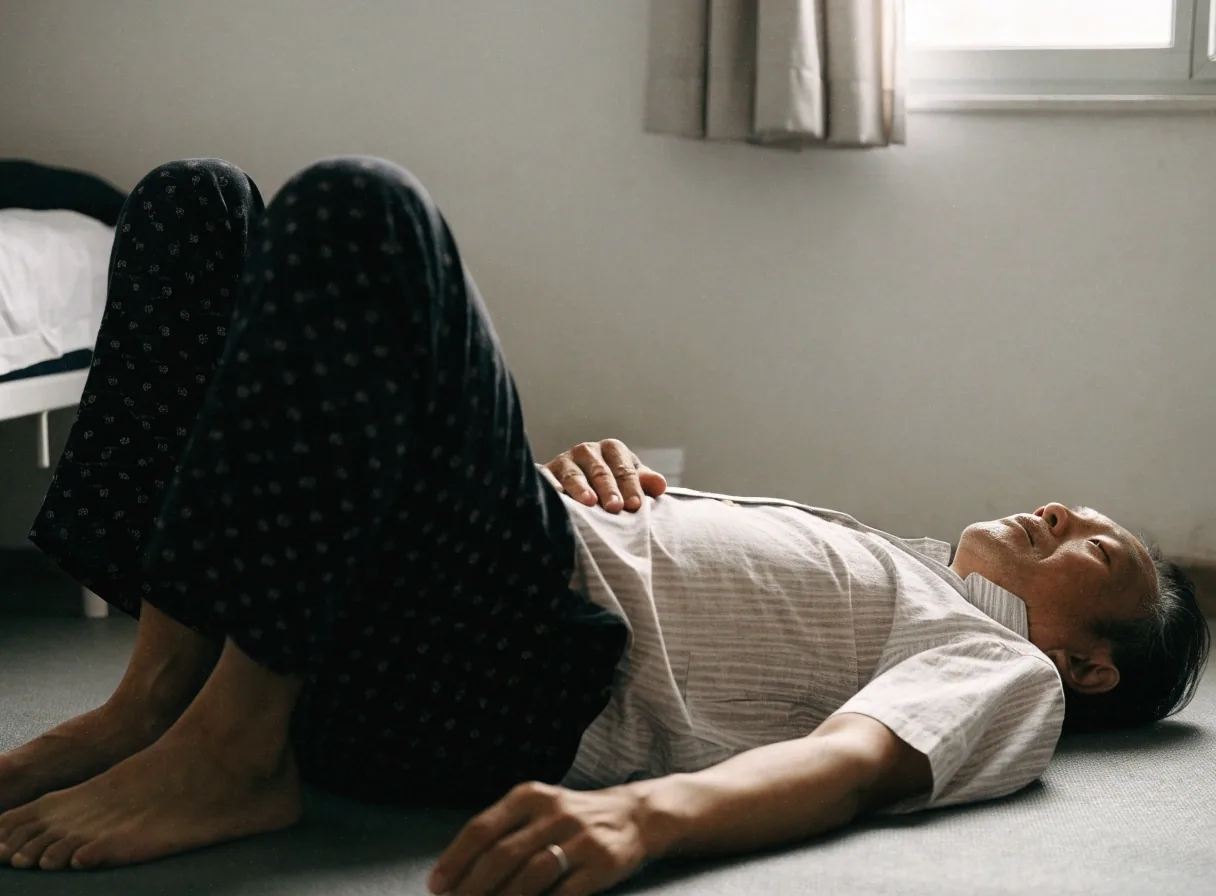
A man lying on his back on a mat with knees bent, learning to feel the pelvic floor muscle

Stage one

Lying down

On your back with knees bent, the muscle is easiest to find. Squeeze as if you are stopping gas, hold briefly, then let go fully. Learn the release as carefully as the squeeze.

Keep breathing normally throughout. If you catch yourself holding your breath, the squeeze is too hard.


A man sitting upright on a chair with feet flat, practising the same squeeze while seated

Stage two

Sitting

Sit forward on the chair, both feet flat, spine tall. Repeat the same squeeze and release. This is the stage most people can fold into a working day without anyone noticing.

A man standing with even weight and light support at a kitchen counter, adding gravity to the routine

Stage three

Standing

Stand with weight spread evenly. The same squeeze now works against gravity, which makes it harder to hold longer. Keep the set shorter here than in the earlier stages.

A quiet living room in the morning with a mat on the floor, showing where a daily routine can start

Where the routine fits in your day

Most men who keep a routine do it at the same hour, in the same place, with no setup. Choose the slot that survives a busy week, not the one that looks best on paper.

If you work long hours in Jakarta traffic, the commute itself is a usable slot: the sitting set can be done in a parked car or on a bus seat without anyone knowing.

Three slots that tend to hold

  • Right after waking

    Do the lying set before you get out of bed. No equipment, no travel, nothing to forget.

  • Mid-morning at your desk

    The sitting set takes a couple of minutes and fits between tasks. Stand up afterwards to break the position.

  • Before bed

    A short standing set, then the lying set again if you have energy left. Keep it light at this hour.

Tracking without turning it into a chore

You only need two things written down: that you did the set, and which position you used. That is enough to see whether the habit is holding, and when it is time to move on.

Did the set today

A single mark in a paper calendar square, or a dot in a phone note.

Shows your real pattern across a month, including the days you missed.

Position used

Write L, S or St — lying, sitting or standing — beside the mark.

Tells you when a position has become easy and it is time to add the next one.

How the set felt

One word: easy, steady or strained. Nothing longer is needed.

Gives you a reason to shorten the set on a strained day instead of quitting the week.

A weekly look back

Two minutes on the same evening each week, reading your own marks.

Keeps the plan honest and stops small gaps turning into abandoned months.

Bring this record with you if you decide to talk to a qualified health professional about your pelvic floor. Notes about your own pattern are more useful than trying to remember how the last month went.

A man walking at an easy pace along a residential street in the early evening

What a realistic week looks like

Five days of short sets is a good week. Two of those days may be lying down only, because that is the slot that survived. That still counts.

Missing a day does not undo the days you did. Restart on the next slot rather than waiting for a clean Monday, and keep the set at the stage where it last felt steady.

Walking, standing at a desk and moving regularly through the day are a sensible background to any pelvic floor routine. They do not replace the sets, but they keep the muscles working between them.

Things that quietly slow a routine down

These are the most common reasons a plan stalls. Each one is easy to correct once you notice it in your own notes.

Squeezing harder instead of longer

Extra force usually shows up as a held breath, a tightened stomach or a clenched jaw. The pelvic floor responds better to a moderate squeeze held for a few seconds and then fully released.

If you cannot tell whether the muscle is still engaged, you have not released it. Let go completely before the next repetition.

Changing position too early

Moving to standing before the seated set feels steady makes the whole routine harder to read. Give each stage a full week before you judge it.

Long gaps with no plan

A week off is normal. Two months off usually means the slot itself stopped working — pick a different time of day rather than pushing harder at the old one.

Common questions about daily routines

How many days a week should I plan for?

Plan for five days and treat two as open. If five feels heavy in your first week, start with three and add days once the slot is reliable. Consistency across weeks matters more than the number on any single day.

How do I know I am using the right muscle?

The squeeze should feel like the movement that stops gas, with a slight lift inward. Your stomach, thighs and buttocks stay relaxed. If those tighten first, reduce the effort and try again lying down where it is easier to feel.

Can I split the sets across the day?

Yes, and many people find it easier. One set in the morning and one in the evening is a common pattern. Keep the same position on both sets so your notes stay comparable from week to week.

What if the routine starts to feel uncomfortable?

Stop the set for that day and reduce the effort or the count next time. This page is general exercise guidance, not personal advice, and it cannot tell you what is right for your own body. Speak with a qualified health professional if something does not settle or if you are unsure how to begin.

Where should I go next?

If you are still learning to find the muscle, start with the pelvic floor exercises for men page. If the movement itself is unclear, the Kegel exercises guide breaks it into steps. For a broader look at daily habits, the bladder and bowel control basics page covers the background.

A calm balcony at dusk, the quiet place where a daily routine can end the day

Pick one slot, start at the stage you can hold

Choose the time, choose lying or sitting, and note it for a week before you change anything. If you would rather read the exercises in more detail first, the guide pages below cover each part of the routine.

Male Vitality Exercises publishes general exercise and self-care information for men in Indonesia. It is educational content and does not replace advice from a qualified health professional.